Multimodal AI refers to machine learning models capable of processing and integrating information from multiple modalities or types of data. These modalities can include text, images, audio, video and other forms of sensory input.
Unlike traditional AI models that are typically designed to handle a single type of data, multimodal AI combines and analyzes different forms of data inputs to achieve a more comprehensive understanding and generate more robust outputs.
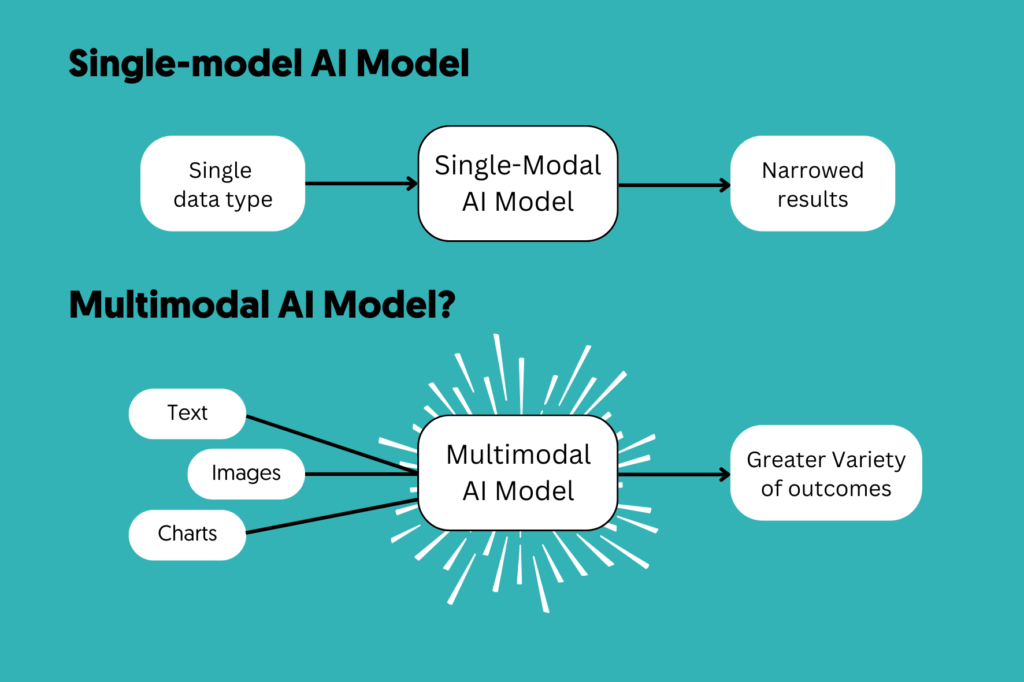
As an example, a multimodal model can receive a photo of a landscape as an input and generate a written summary of that place’s characteristics. Or, it could receive a written summary of a landscape and generate an image based on that description. This ability to work across multiple modalities gives these models powerful capabilities.
Key Features of Multimodal AI
•Combines multiple data sources
• More accurate and contextual outputs
•Supports different input/output formats
Advantages of Multimodal AI
- Better decision-making
- Higher accuracy
- Handles noisy/missing data
- Natural human interaction
Challanges of Multimodal AI
- Data representation issues
- Alignment between data types
- Complex integration
- Reasoning across inputs
Learn More:
Predictive Artificial Intelligence – https://learntodatascience.com/predictive-artificial-intelligence/
Generative Artificial Intelligence (AI) – https://learntodatascience.com/generative-artificial-intelligence-ai/
Explainable Artificial Intelligence (XAI) – https://learntodatascience.com/explainable-artificial-intelligence-xai/