AI is no longer just a tool that answers questions or predicts outcomes. In 2026, a major shift is happening: AI agents are becoming active participants in the data science workflow. These systems can plan, execute, and refine tasks with minimal human intervention—changing how data is collected, analyzed, and deployed.

What Are AI Agents in Data Science?
AI agents are autonomous or semi-autonomous systems powered by advanced models such as Large Language Models that can:
- Understand a goal (e.g., “analyze customer churn”)
- Break it into steps (data cleaning, feature selection, modeling)
- Execute tasks using tools (Python, SQL, APIs)
- Evaluate results and improve outputs
Unlike traditional scripts or dashboards, AI agents behave more like junior data scientists that can reason and act.
How AI Agents Work in Data Science Pipelines
A modern AI agent typically follows this workflow:
1. Task Understanding
The agent interprets a request like:
“Find why sales dropped last quarter.”
2. Planning
It creates a structured plan:
- Load sales data
- Identify anomalies
- Compare regions/time periods
- Build predictive insights
3. Tool Usage
Agents interact with tools such as:
- SQL databases
- Python notebooks
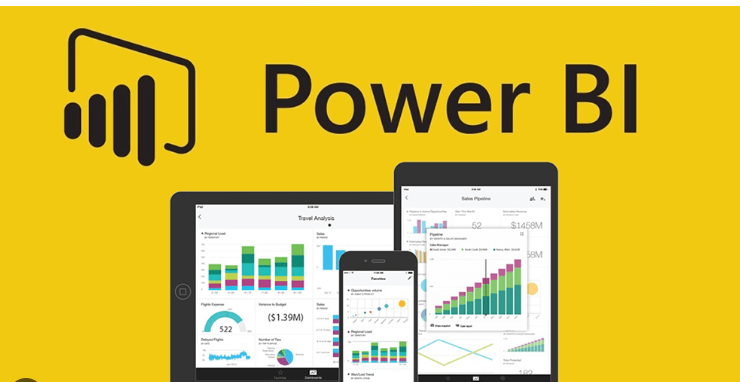
- BI dashboards
- APIs and cloud storage
4. Execution
The agent runs queries, generates charts, and builds models automatically.
5. Self-Evaluation
It checks:
- Are results consistent?
- Is the model accurate?
- Do insights make business sense?
Then it improves its output.
Key Benefits of AI Agents in Data Science
🚀 1. Faster Analysis
Tasks that once took hours or days can now be completed in minutes.
🧠 2. Reduced Manual Work
Data cleaning, feature engineering, and reporting become partially automated.
📊 3. Better Decision Support
AI agents continuously monitor data and provide real-time insights.
💡 4. Accessibility for Non-Experts
Even non-technical users can perform advanced analytics through natural language.
Real-World Use Cases
🏦 Finance
- Fraud detection systems that adapt in real time
- Automated risk analysis reports
🛒 E-commerce
- Customer behavior analysis
- Personalized recommendation systems
🏥 Healthcare
- Patient risk prediction
- Medical data summarization
📈 Marketing
- Campaign performance tracking
- Audience segmentation automation
AI Agents vs Traditional Data Science
| Feature | Traditional Data Science | AI Agents |
|---|---|---|
| Workflow | Manual coding | Automated planning + execution |
| Speed | Slow to moderate | Fast |
| Flexibility | Requires human updates | Self-adapting |
| Skill requirement | High technical skill | Low to moderate |
Challenges and Limitations
Despite their power, AI agents still face challenges:
⚠️ 1. Data Quality Dependency
Bad data leads to misleading insights.
⚠️ 2. Lack of True Understanding
Agents simulate reasoning but don’t truly “understand” context.
⚠️ 3. Security Risks
Access to sensitive databases requires strict control.
⚠️ 4. Over-Automation Risk
Excess reliance may reduce human oversight.
Future of AI Agents in Data Science
The future is moving toward multi-agent systems, where multiple AI agents collaborate:
- One agent cleans data
- Another builds models
- Another validates results
- Another generates reports
This creates a fully automated analytics ecosystem.
Eventually, data scientists will shift from:
“Writing code” → “Designing intelligent systems”
Conclusion
AI agents are redefining the role of data science by making analytics faster, smarter, and more accessible. Powered by technologies like Large Language Models, they are moving beyond assistance into autonomous execution.
However, human oversight remains essential to ensure accuracy, ethics, and business relevance.
The future of data science is not human vs AI—it’s human + AI agents working together.
Workflow vs. AI Agent: Understanding the Key Differences