Author name: Ramesh Banjade

lBusiness Intelligence Developer with a demonstrated history of working in the banking industry. My area of expertise is centered around the use of cutting-edge tools and technologies, including Power BI, SQL, SQL Server Reporting Services (SSRS), SSAS, Python, Machine Learning, and Predictive Modeling to extract meaningful insights from data and facilitate informed decision making and business growth. Ramesh Banjade Business Intelligence Developer Ramesh Banjade | LinkedIn

An Introduction to Programming and Computer Science with Python

python book

An Introduction to Programming and Computer Science with Python, Second Edition is a free, open-source Python programming textbook designed to introduce beginners to programming and fundamental computer science concepts. Written by Clayton Cafiero, the second edition was published on July 11, 2025, and was originally developed for the University of Vermont’s CS 1210 Introduction to

An Introduction to Programming and Computer Science with Python Read More »

Why Financial Data Analytics, BI, and Machine Learning Matter More Than Advanced LLM Features in Banking

llm

The banking industry is entering an important phase of artificial intelligence adoption. Large language models (LLMs) and generative AI have created enormous excitement, with banks experimenting with AI assistants, conversational banking, automated document generation, coding copilots, research tools, and customer-service applications. These capabilities are powerful. But there is a risk of confusing what is technologically

Why Financial Data Analytics, BI, and Machine Learning Matter More Than Advanced LLM Features in Banking Read More »

Best AI Tools for Data Analysis in 2026: Complete Guide for Beginners and Professionals

AI Tools

Artificial intelligence is changing the way people work with data. From students and beginners to professional data analysts and business intelligence teams, AI tools can make data analysis faster, easier, and more accessible. Today, AI can help with tasks such as analyzing datasets, writing SQL queries, generating Python code, creating charts, identifying trends, and explaining

Best AI Tools for Data Analysis in 2026: Complete Guide for Beginners and Professionals Read More »

From SQL to Insights: How AI Agents Are Automating the Data Science Workflow

ai agent

Data science has traditionally been a sequence of highly manual activities: understanding a business problem, querying databases, cleaning data, performing exploratory data analysis (EDA), building models, evaluating results, and finally communicating insights through reports or dashboards. The emergence of AI agents is beginning to change this workflow. Unlike a traditional chatbot that responds to a

From SQL to Insights: How AI Agents Are Automating the Data Science Workflow Read More »

Workflow vs. AI Agent: Understanding the Key Differences

ai agent

Artificial Intelligence is transforming how businesses automate work, but not all automation systems are created equal. Two concepts that are often confused are workflows and AI agents. While both aim to improve efficiency and reduce manual effort, they operate in fundamentally different ways. Understanding the distinction between workflows and AI agents is essential for organizations

Workflow vs. AI Agent: Understanding the Key Differences Read More »

AI Agents in Data Science: How Autonomous Systems Are Transforming Analytics in 2026

ai agent

AI is no longer just a tool that answers questions or predicts outcomes. In 2026, a major shift is happening: AI agents are becoming active participants in the data science workflow. These systems can plan, execute, and refine tasks with minimal human intervention—changing how data is collected, analyzed, and deployed. What Are AI Agents in

AI Agents in Data Science: How Autonomous Systems Are Transforming Analytics in 2026 Read More »

Multimodal Artificial Intelligence (AI)

multimodal ai

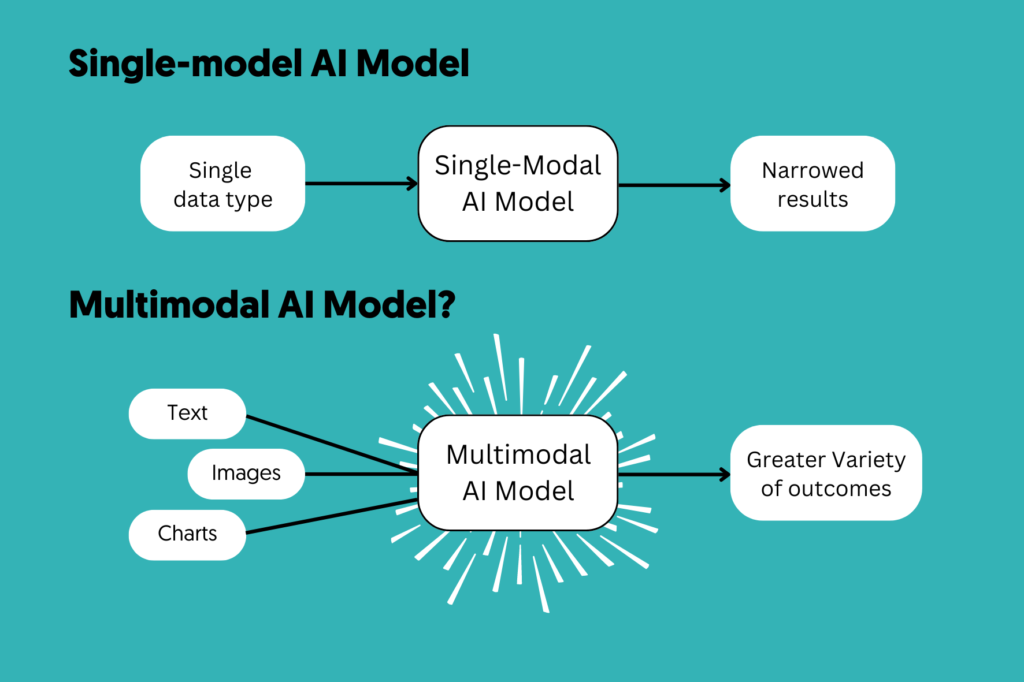
Multimodal AI refers to machine learning models capable of processing and integrating information from multiple modalities or types of data. These modalities can include text, images, audio, video and other forms of sensory input. Unlike traditional AI models that are typically designed to handle a single type of data, multimodal AI combines and analyzes different

Multimodal Artificial Intelligence (AI) Read More »

Scroll to Top