In today’s data-driven world, organizations are rapidly moving toward Business Intelligence (BI) improve decision-making, increase operational efficiency, and gain competitive advantage. However, many businesses struggle with disconnected data, manual reporting processes, and limited analytical capabilities.
Microsoft Power BI plays a critical role in helping organizations successfully progress through their BI and AI journey by transforming raw data into intelligent insights and enabling advanced analytics across the enterprise.
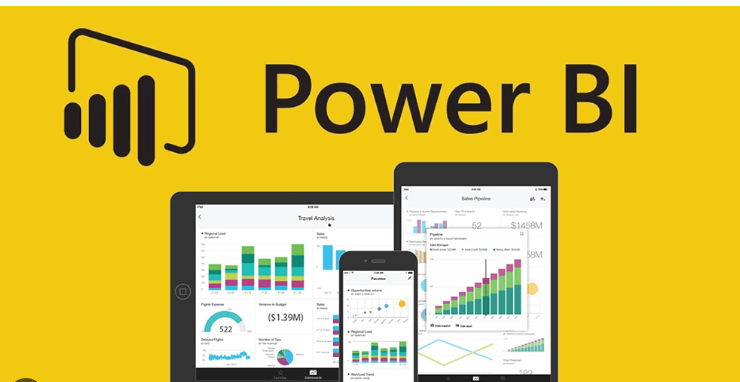
Understanding the BI and AI Journey
The BI and AI journey is the process through which organizations evolve from basic reporting to intelligent, predictive, and automated decision-making.
This journey usually includes:
- Data Collection
- Data Integration
- Reporting and Visualization
- Business Intelligence and Analytics
- Predictive Analytics
- Artificial Intelligence and Automation
Power BI supports each stage of this transformation by providing scalable analytics capabilities, real-time insights, and AI-driven features.
How Power BI Supports the BI and AI Journey
1. Connecting and Centralizing Organizational Data
The first challenge in any BI and AI initiative is managing data from multiple systems.
Organizations typically store data across:
- ERP systems
- CRM platforms
- Cloud applications
- Excel files
- Databases
- APIs
Microsoft Power BI allows organizations to connect and consolidate data from hundreds of sources into a centralized platform.
This creates:
- A single source of truth
- Improved data consistency
- Better governance
- Faster access to insights
Without centralized data, AI and advanced analytics cannot function effectively.
2. Transforming Raw Data into Business Intelligence
After data integration, organizations need to convert data into meaningful business insights.
Power BI enables this through:
- Interactive dashboards
- Real-time reporting
- KPI monitoring
- Self-service analytics
- Data visualization
Instead of manually preparing reports, teams can analyze information dynamically and identify trends quickly.
For example:
- Sales teams can track revenue growth
- Finance departments can monitor profitability
- HR teams can analyze employee performance
- Operations teams can identify process inefficiencies
This stage establishes the organization’s BI foundation.
3. Enabling a Data-Driven Culture
A successful BI and AI journey requires employees and decision-makers to rely on data rather than assumptions.
Power BI helps organizations build a data-driven culture by:
- Making analytics accessible to non-technical users
- Providing intuitive dashboards
- Allowing self-service reporting
- Supporting collaboration across departments
As more employees use analytics in daily operations, organizations improve:
- Decision quality
- Operational transparency
- Business agility
This cultural transformation is essential before implementing advanced AI solutions.
4. Supporting Advanced Analytics and Data Science
Once organizations mature in BI, they begin exploring advanced analytics and AI capabilities.
Power BI supports this transition through:
- Python integration
- R scripting
- Machine learning connectivity
- AI-powered visuals
- Predictive analytics models
Data scientists can integrate machine learning outputs directly into Power BI dashboards, allowing business users to consume AI-driven insights easily.
Organizations can:
- Forecast sales trends
- Predict customer churn
- Detect anomalies
- Optimize inventory
- Improve demand planning
This bridges the gap between traditional BI and modern AI systems.
5. Democratizing AI Across the Organization
One major challenge in AI adoption is that AI tools are often limited to technical teams.
Power BI democratizes AI by embedding intelligent capabilities directly into dashboards and reports.
Features include:
- Natural language queries
- Automated insights
- AI visualizations
- Smart narratives
- Cognitive services integration
Business users can interact with AI-generated insights without needing deep programming or data science expertise.
This increases organization-wide AI adoption and accelerates innovation.
6. Real-Time Decision Making with AI Insights
Modern businesses need fast responses to changing conditions.
Power BI supports real-time analytics through:
- Live dashboards
- Streaming data
- Automated alerts
- Cloud-based reporting
Combined with AI models, organizations can:
- Detect operational risks instantly
- Respond to customer behavior changes
- Monitor supply chain disruptions
- Identify fraud patterns
This improves responsiveness and operational intelligence.
7. Integrating with Microsoft AI Ecosystem
Organizations using Microsoft technologies benefit significantly from Power BI’s ecosystem integration.
Microsoft Power BI integrates with:
- Microsoft Azure
- Azure Machine Learning
- Microsoft Fabric
- Excel
- Teams
- SQL Server
This creates a unified analytics and AI environment where organizations can:
- Build AI models
- Deploy machine learning pipelines
- Visualize predictions
- Collaborate securely
The integration simplifies AI implementation and reduces technical complexity.
The Organizational Benefits of Using Power BI for BI
Improved Decision-Making
Organizations gain access to accurate, real-time insights that support strategic and operational decisions.
Faster Digital Transformation
Power BI accelerates the transition toward modern, data-centric operations.
Increased Operational Efficiency
Automated reporting and AI insights reduce manual work and improve productivity.
Better Forecasting and Predictive Analysis
Organizations can anticipate trends and risks before they occur.
Enhanced Competitive Advantage
Businesses that leverage BI and AI effectively can innovate faster and respond better to market changes.
Business Intelligence Journey with Power BI
| Stage | Organizational Capability | Power BI Contribution |
|---|---|---|
| Data Collection | Gathering raw business data | Connects multiple data sources |
| Reporting | Creating basic reports | Interactive dashboards and visualizations |
| Business Intelligence | Performance monitoring | KPI tracking and analytics |
| Advanced Analytics | Predictive insights | AI integration and machine learning support |
| Artificial Intelligence | Intelligent automation | AI-powered analytics and decision support |
Why Power BI Is an Ideal Platform for the Journey
Organizations choose Power BI because it offers:
- Scalability
- Ease of use
- Strong security
- Cloud capabilities
- AI integration
- Cost efficiency
- Enterprise-grade analytics
It supports both small organizations beginning their BI initiatives and enterprises implementing advanced AI strategies.
Conclusion
The journey toward Business Intelligence and Artificial Intelligence requires more than just collecting data. Organizations need a platform that can unify information, generate actionable insights, support advanced analytics, and make AI accessible across the business.
Microsoft Power BI enables organizations to move step-by-step from traditional reporting to intelligent, AI-driven decision-making. By combining powerful visualization, data integration, advanced analytics, and AI capabilities, Power BI becomes a strategic platform for modern organizations seeking innovation, agility, and sustainable growth in the digital era.
Related Link:
https://www.microsoft.com/en-us/power-platform/products/power-bi